
While we are very pleased with how the yurt turned out there are still things we would do differently if we were to start over.

You live and learn is a well known saying for a reason. It is true. Once you experience something, you have a better understanding of what worked, what didn’t, and things to consider. It is easy to look back and point out the decisions you would make differently.
Even though it is still a work in progress, we really enjoy life in the yurt. If you want to learn why we chose a yurt to build you can find that here. For now, here are some things we would do differently if we had the chance to start over.
Things We Would Do Differently
- Splurge on real windows
- No French doors
- Thicker insulation
- Check the weather not just for rain but for wind
- Have extra manpower for the roof
- Have a back up plan for meals for your volunteers
Upgrade More of the Windows
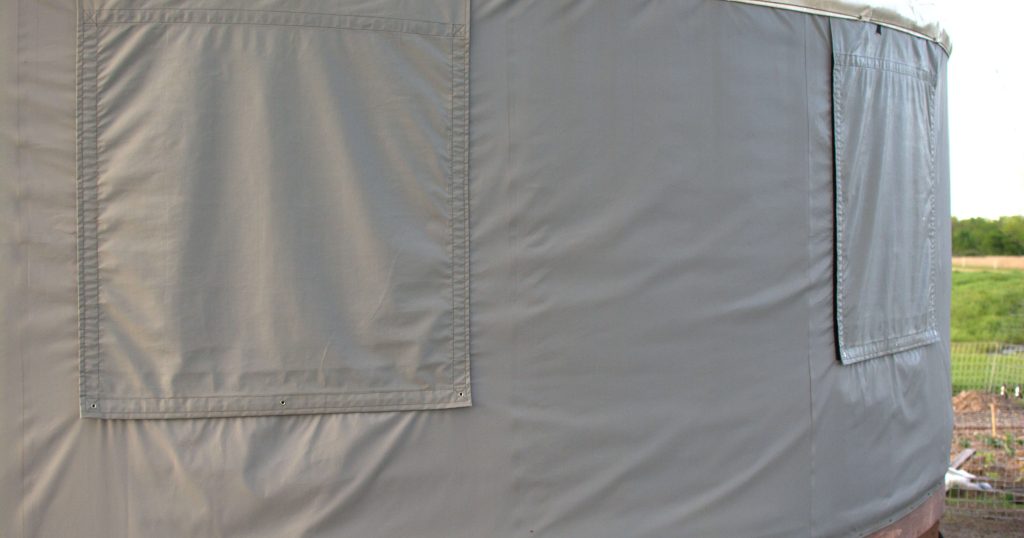
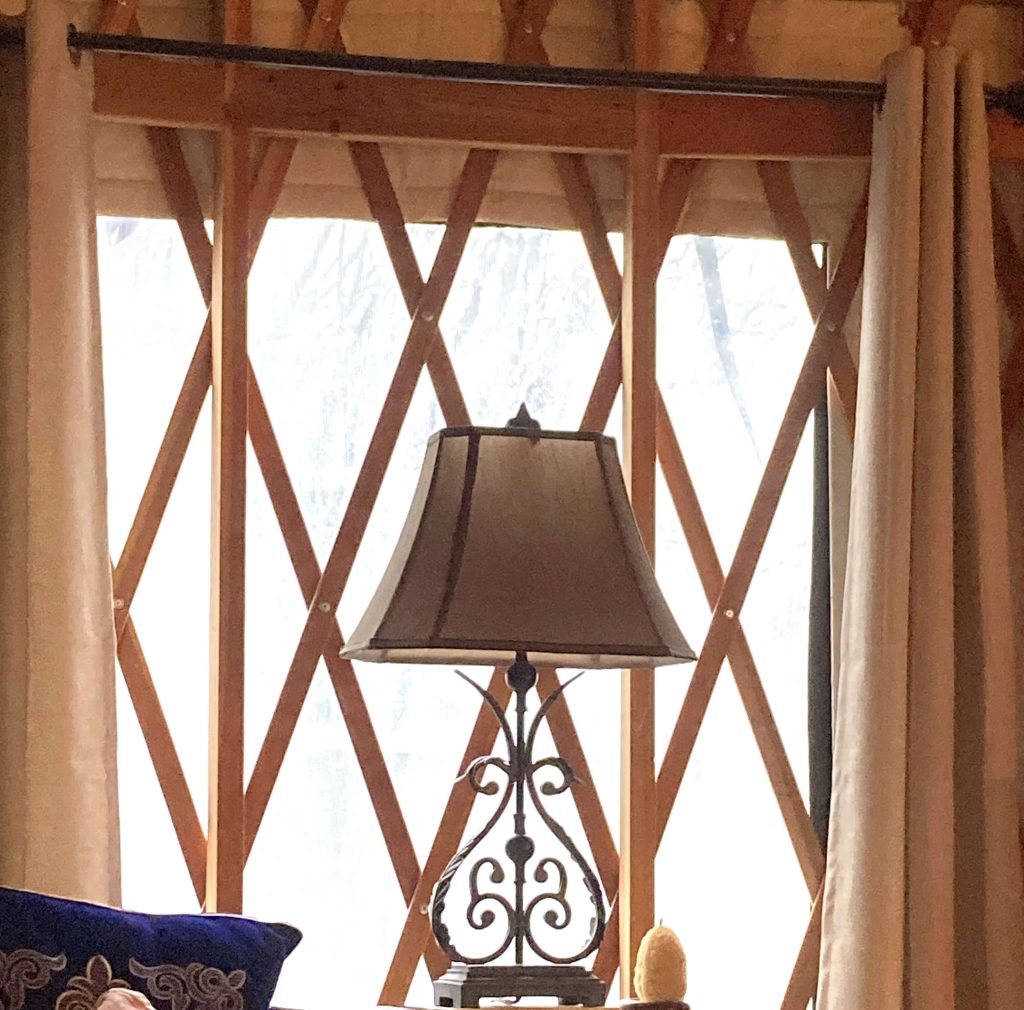
The standard package comes with a certain number of fabric windows based on your size yurt. These windows have the same material for the yurt wall over them, but you can roll them up to expose the window. You can even roll up the window to expose the screen. You can upgrade to thermal-paned cased windows that are like windows in a traditional home. We added this to our bedroom so we could have an emergency exist should the need arise. We also enjoy the easy view to the garden and pond. I wish we had upgraded our other windows as well.
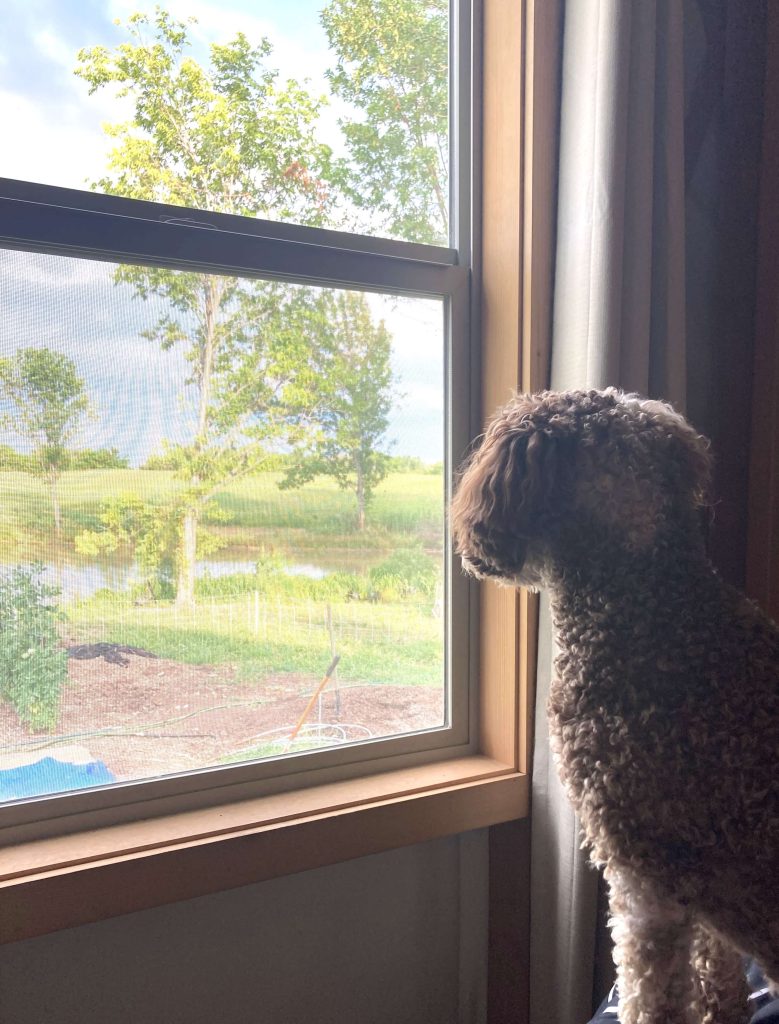
The downside to the fabric windows is you must go outside the yurt to open them. This is even more inconvenient if you have not finished building your deck and must use a ladder to roll them up and down. When you roll up the outer fabric you tie them up with straps. In the wind, the straps fall and smack against the window making an annoying sound. The upgraded windows are substantially more expensive, but if you can swing it, we would highly recommend it.
French Doors
We chose to get French doors to better take in the beautiful view. They have given us nothing but trouble. It is nothing that the yurt company did but is more about our location and the direction in which we placed them. They face almost due west and any time a storm comes in, the wind blows the rain through the gaps between or underneath the French doors. You may ask why are there gaps? Answer- the gusty winds often push the doors inward enough to break the seals that exist. Jonathan tried everything to fix the problem but, in the end, it was no use. Even several of our friends who have French doors on their traditional homes have trouble with them.
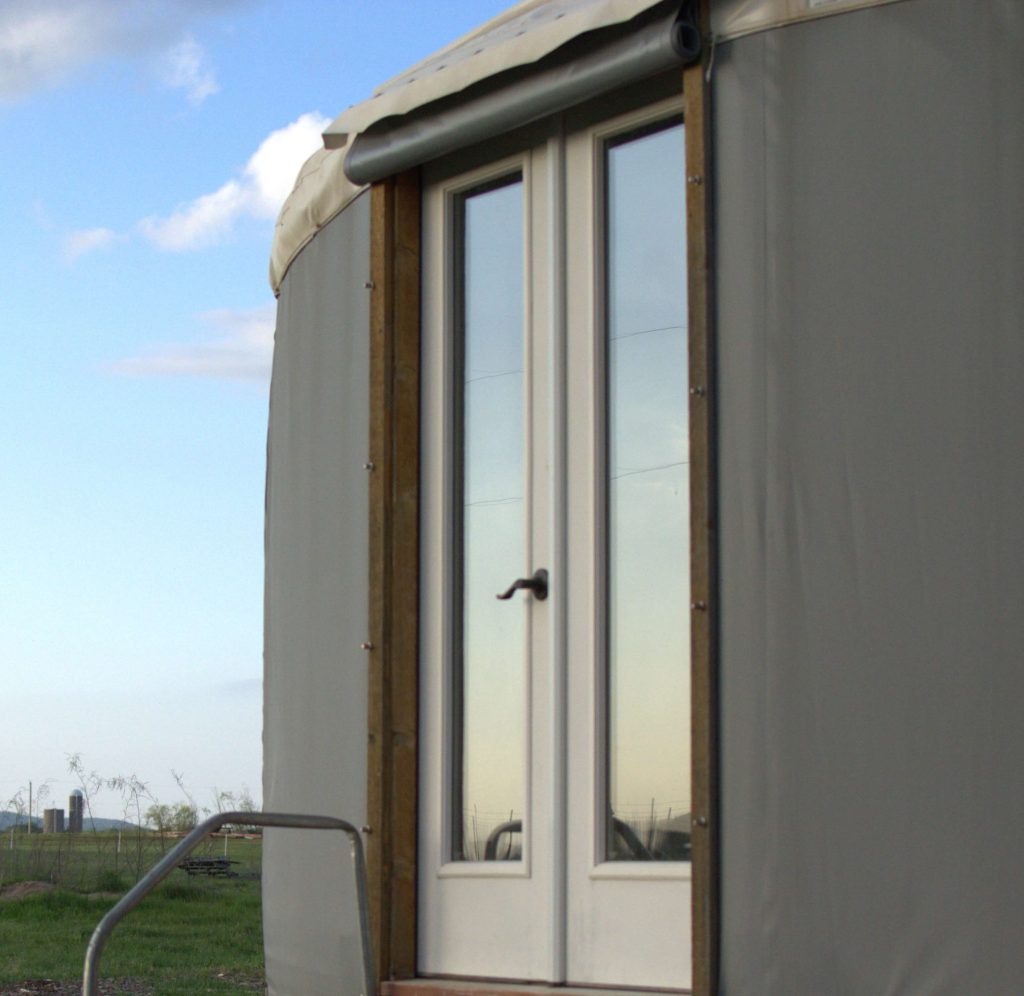
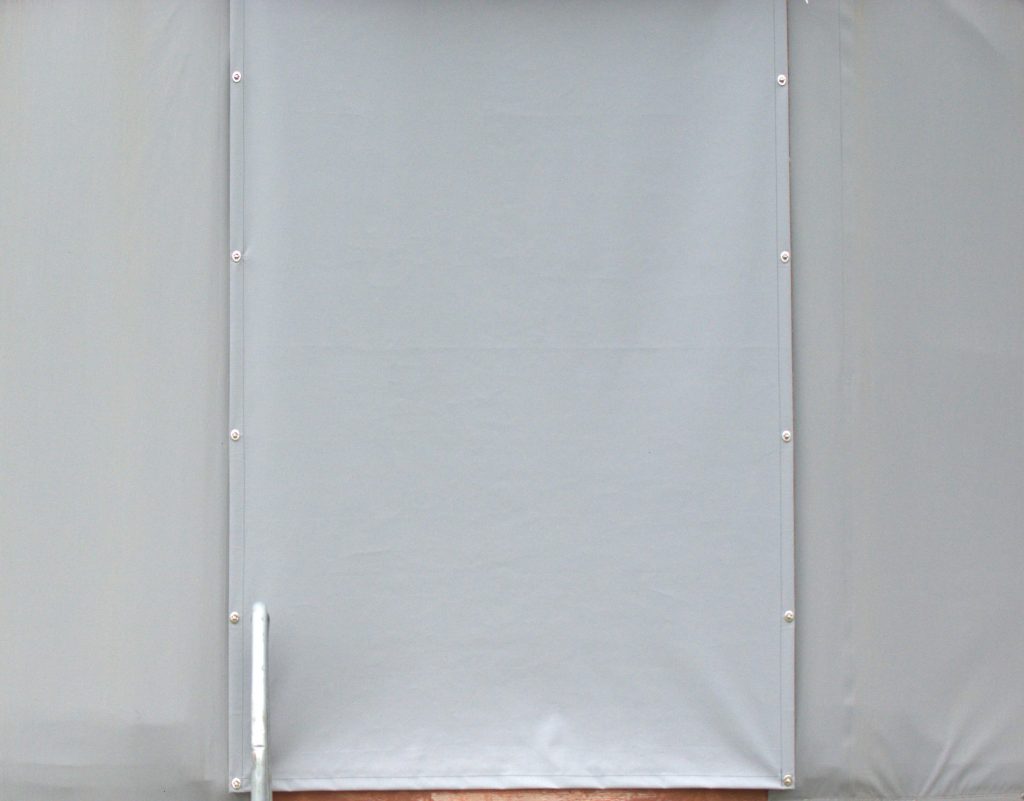
Jonathan discovered that if we just tarped the area, the rain didn’t find its way in the yurt. While this was a solution to the problem, neither of us were keen on the look of the blue tarp door covering (imagine that), so he spoke with Shelter Design Yurts about a solution, and they came up with a great plan. They took the same material as the outside of the yurt and made a covering that easily clips on to the framing of the doors. We can place this on before storms and it completely blocks all the rain from the doors no matter how hard the wind blows.
Thicker Insulation
We chose the baseline insulation for the yurt as we do not live in a terribly cold climate. You can update to an artic insulation package. While we did choose the right one based on our climate, we think the thicker insulation would help when the cold, northern winds blow in and could potentially keep our cool air in better during the summer months. This has not been a big issue, and we are not completely sure it would change much, but we think it could have been worth it.
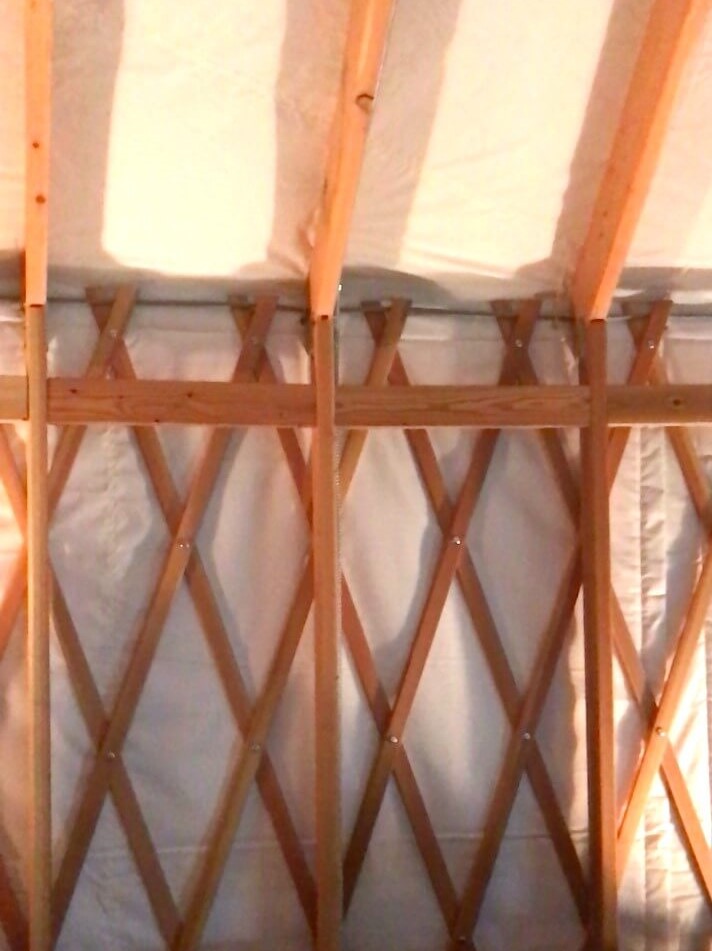
If you would like to check out some of the custom features for the yurt, I encourage you to check out this section of the Shelter Design Yurts website. We get no money from them, we have just enjoyed their work and they have had great customer service.
Check the Weather Before Constructing
Now this may be an obvious point, but somehow, we overlooked the wind factor when we asked our friends to come and help build the yurt. The temperature was nice and there was no rain, but the wind was really blowing. We did not think much of the wind until we went to put on the initial roof covering. We could not keep it in place for anything. Our poor friends were on the top of their ladders and had to hold it down while trying to staple it to the roof frame. All the cover wanted to do was flap around in the wind. Then we had to repeat the frustrating exercise all over again when placing the insulation. Lastly, came the top cover but it was heavy enough to stay in place. It had its own problem we had to deal with.
More Manpower with the Roof
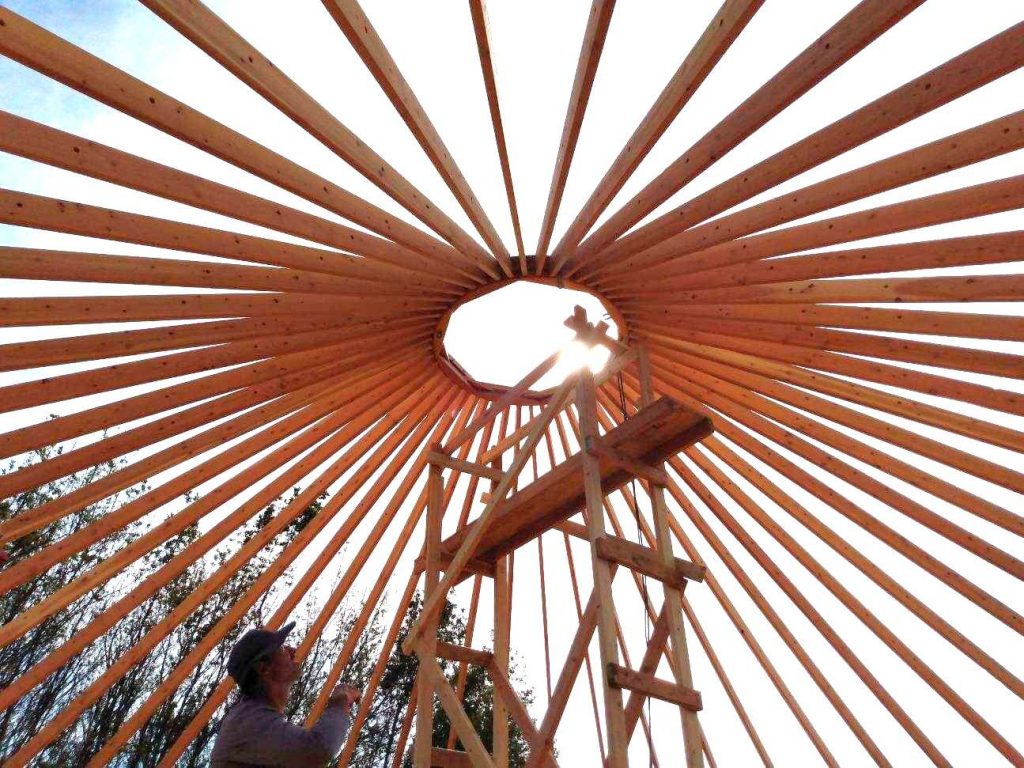
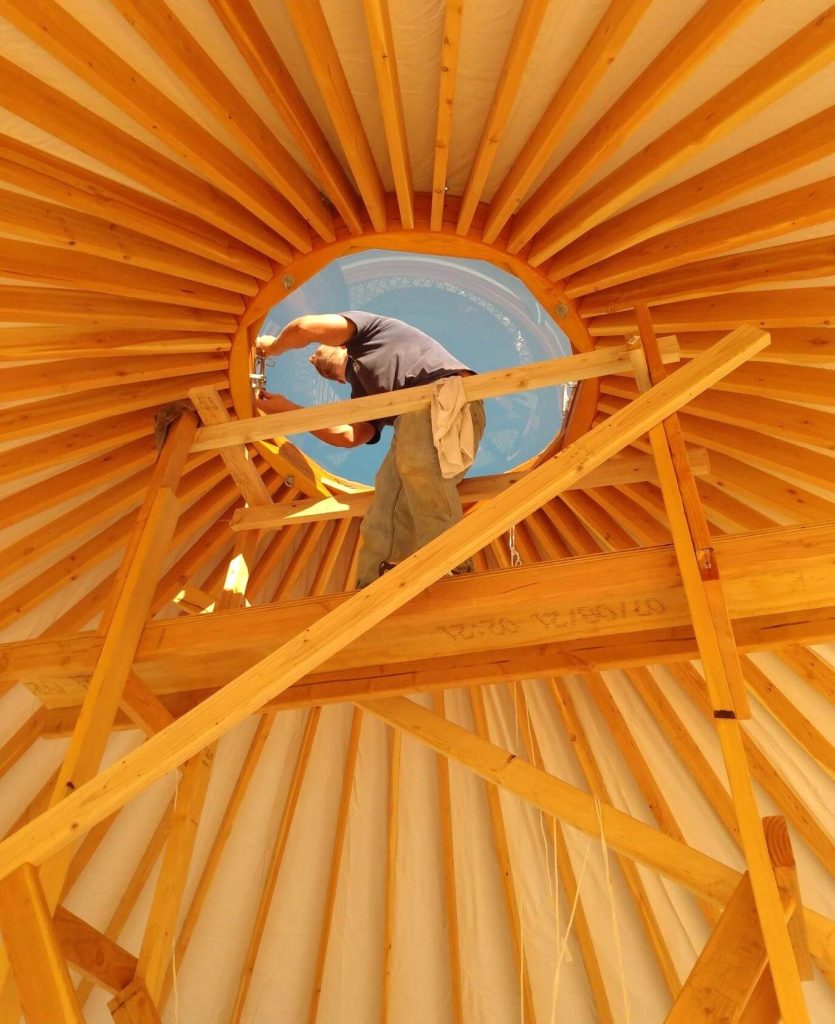
When you buy the yurt, you receive written instructions on how to assemble the yurt, but also video instructions as well. We watched as two men worked to put on the roof. One put it through the dome opening while standing on scaffolding and another man on a ladder outside caught it and helped put it in place. What the video didn’t tell you was the weight difference between a 20’ and a 30’ diameter yurt roof, but since the area is almost doubled, we should have assumed the weight would be substantially more as well. We learned that two men are not enough. I am not sure how they managed, I am assuming experience, but my husband and his two friends could barely manage it due to the weight of lifting the roof cover up to the top of the dome opening. It was brutal to watch, and I can only imagine how brutal it was to accomplish. Somehow, they finally did it.
Plan Dinner in Advance for the Work Crew that Factors in Problems
This may also be another no brainer but let me explain. Constructing the yurt had gone well up to the point of the roof. Things were rolling and all looked good. We had several helpers and a dear friend of mine even coordinated with me to provide a delicious lunch. It wasn’t until later in the day that problems started to arise. I assumed I would always be able to run errands and pick up dinner. As the wind started causing problems, Jonathan and his two friends were on scaffolding and ladders, and I was the only one left on the ground to be the runner. The next thing I know, it is around 9pm and I have nothing to feed these kind friends who have sacrificed their entire Saturday to help us. I was embarrassed and felt terrible. Thankfully, they were incredibly gracious. Remember, always be prepared to feed your volunteers no matter what problems arise!
Let me know in the comments below what you would do differently with your build!
Leave a Reply